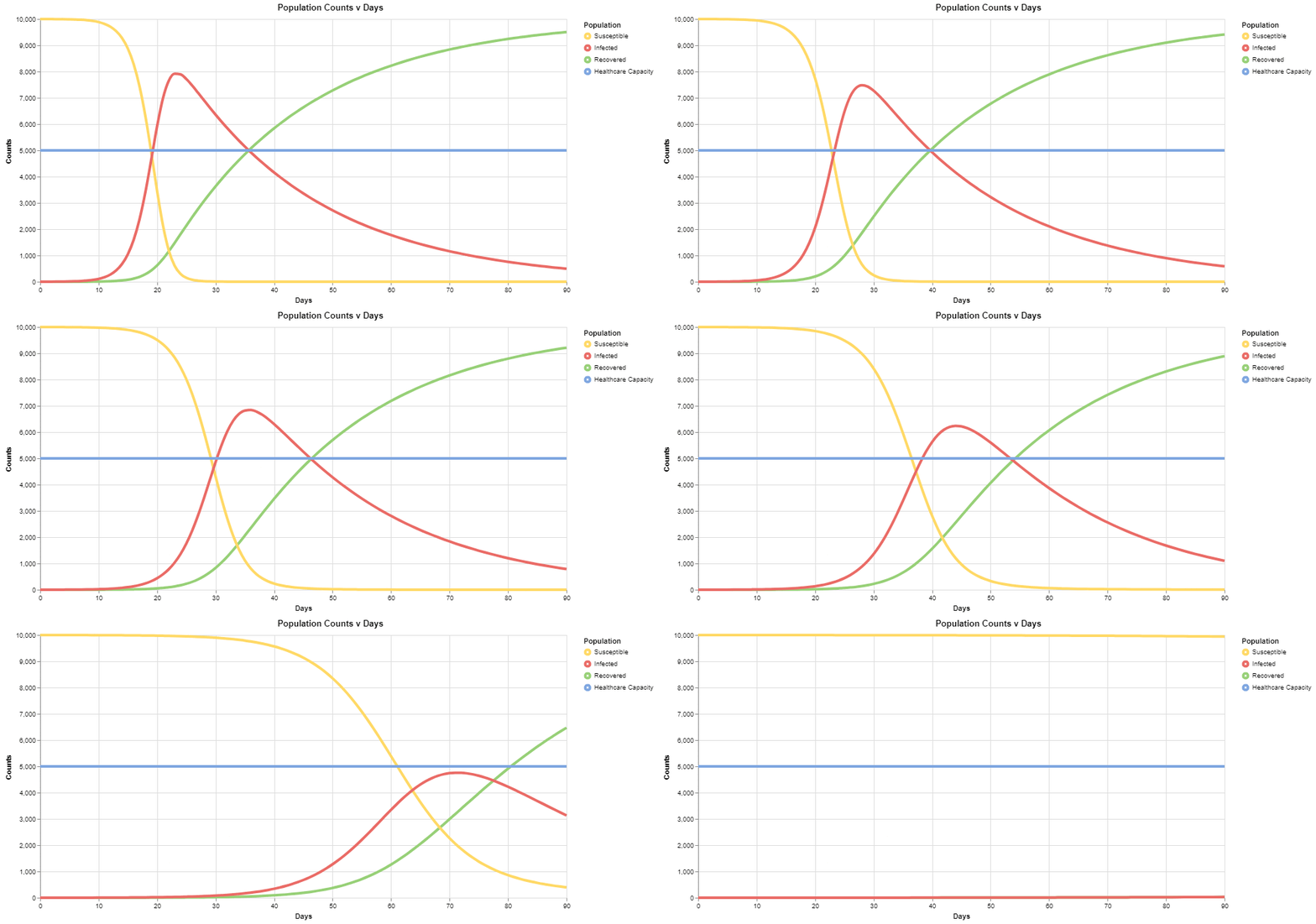
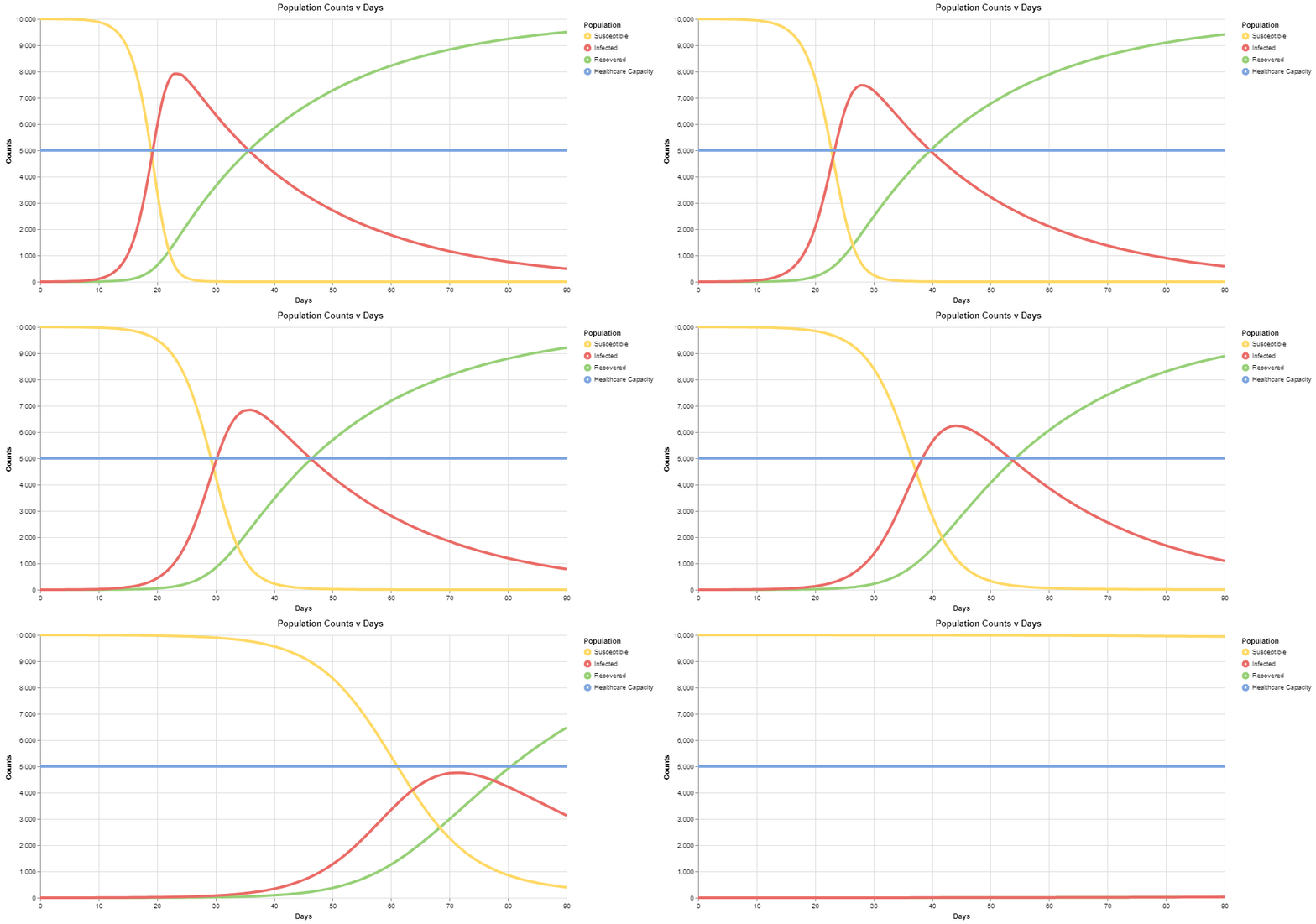
The VERA team modeled the impact of social distancing on the spread of COVID-19. The simulations show that practice of social distancing slows the spread of COVID-19 (“flattens the curve”).
With VERA, you can explore parameter values and see for yourself the flattening of the curve. Interested in learning more? Visit VERA-Epi or read the white paper.
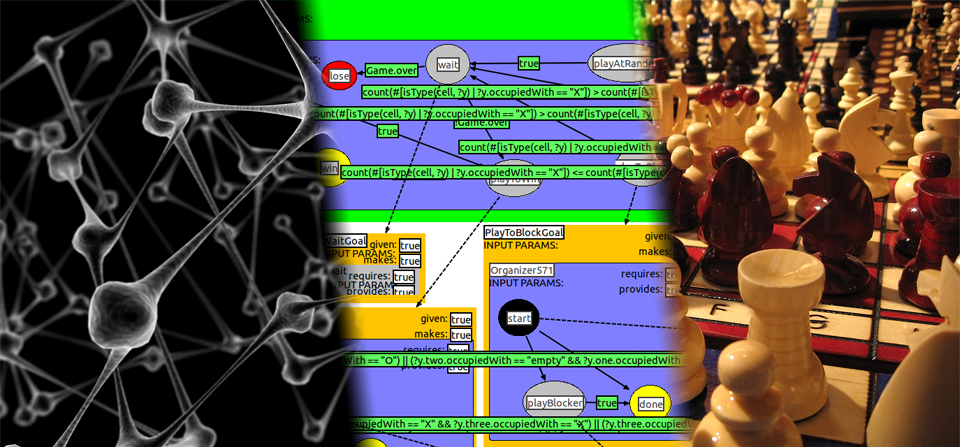
The designs of long-living interactive games evolve through many versions. Changes from one version of a game to the next are typically incremental and often very small. A game designer (or a team of game designers and software engineers) formulates the requirements of the new version of the game, adapts the software for playing the previous versions to meet the new requirements, and implements and evaluates the modified designs of the game and the software. Typically the game designer uses high-level scripting languages to define the game environment (e.g. percepts, actions, rules, constraints) as well as the behaviors of various virtual agents in the game.
We posit that an interesting research issue in game playing is how a virtual agent might adapt its design, and thus its behaviors, to very small changes in its game environment. If the changes in the game environment can be arbitrarily large and complex then this becomes an “AI-complete problem.” However, even if the changes to the game environment are incremental and very small, this is a hard computational problem because changes to the environment can be of many types, modifications to the agent design can be of many types, there is no one-to-one mapping between changes to the environment and modifications to the agent design, and any modification to the agent design needs to be propagated down to the level of program code so that the new software is directly executable in the game environment.
The goal of this project is to develop an interactive environment called GAIA (for Game Agent Interactive Adaptation) in which the game designer generates requirements for a new version of a game, and the designer and the legacy software agents from previous versions of the game cooperatively adapt the agent designs to the new game requirements. We are developing and testing our meta-reasoning technique for adapting a mature program in the domain of turn-based, multi-player, strategy games (specifically FreeCiv).
Our suite of agents Jill Watson, Jill Watson Social Agent, and VERA, under the team name ’emPrize’ made it to the top 10 in the IBM XPrize Competition. To know more about the projects and team members, please visit our emPrize website.
The VERA team of DILab have teamed up with the Jill Watson group to create a 10 video online course on the Scientific Way of thinking. This truly revolutionary course also has access to Jill Watson through a slack channel, so that anyone in the world can ask questions to Jill about VERA. The video series can be found here:
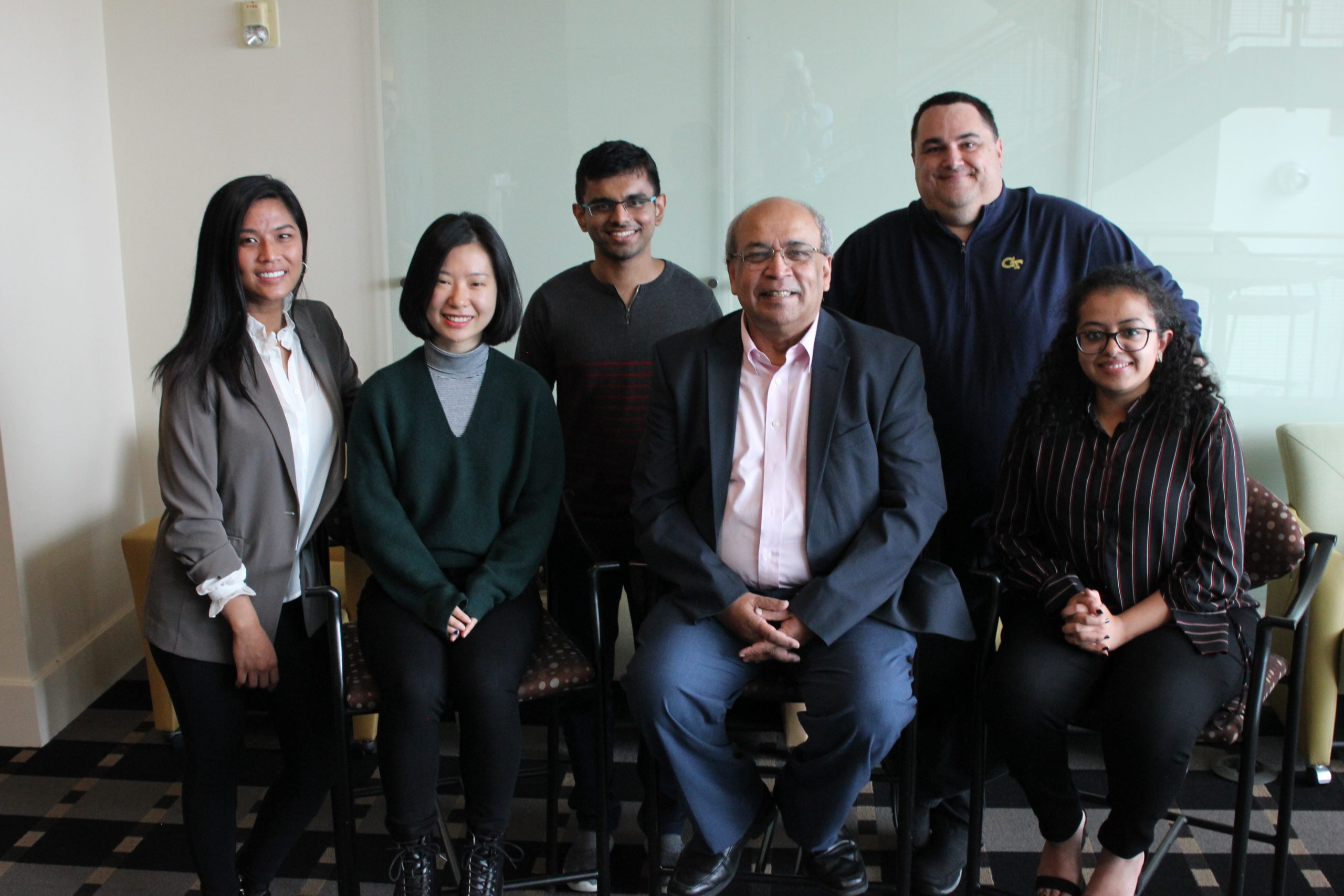
From Left to Right: Ida Camacho, Qiaosi Wang, Rohit A Mujumdar, Ashok Goel, Eric Gregori, Varsha Achar
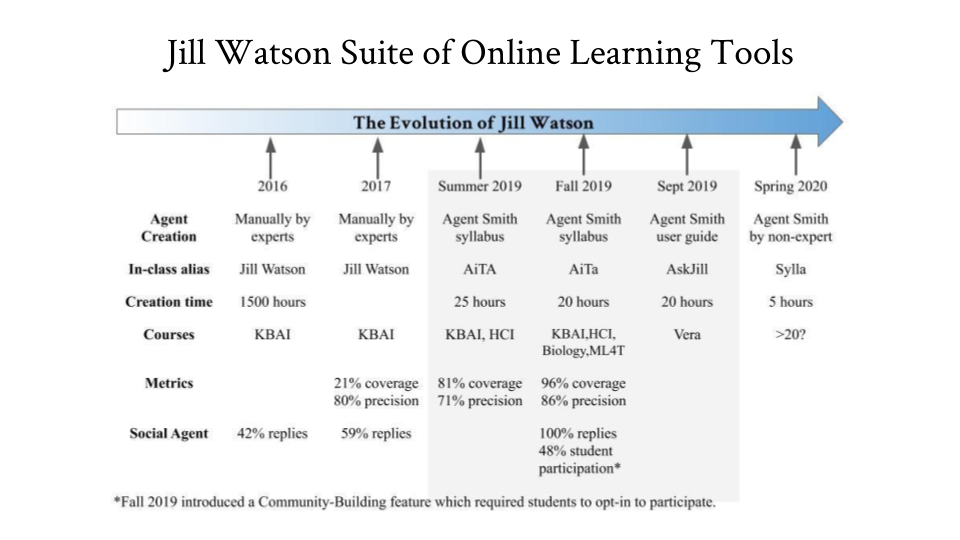
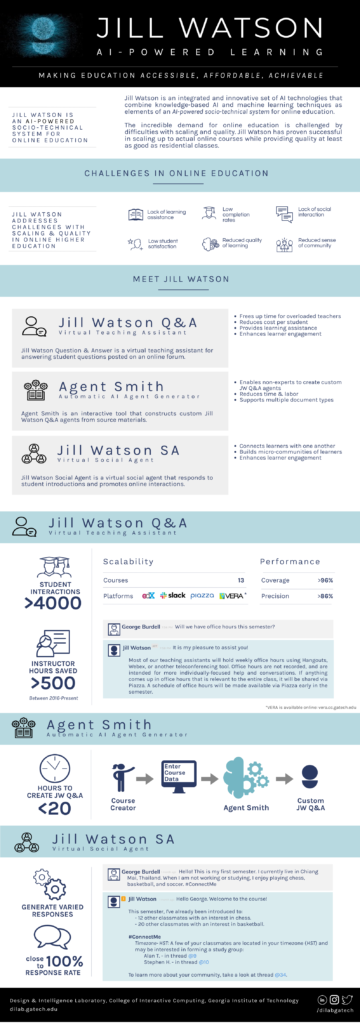
With the advent of Georgia Tech’s OMSCS (a massive online course to earn a Masters in CS), thousands of people around the world have been enrolling to learn. An increase in learners implied more questions being asked on class discussion forums. With a limited number of instructors per course, answering questions became increasingly difficult. This is when Jill Watson was conceived.
Jill Watson is a Virtual Teaching Assistant, that can answer questions about a course syllabus, when deployed on online communication forums like Piazza or Slack.
What initially began as a question answering agent for course syllabi, Jill Watson is gradually permeating into other domains. Jill Watson can now answer questions about VERA‘s instructional manual.
Watch the video below to learn more about Jill Watson!
The Virtual Ecological Research Assistant (VERA) is developed by the Design & Intelligence Lab at Georgia Tech, in collaboration with Smithsonian’s Encyclopedia of Life Department. The VERA system leverages AI technologies like Natural Language Processing (NLP) and AI compiler to support cognitive aspects of learning such as inquiry-based learning and model-based reasoning.
VERA enables users to construct conceptual models of ecological systems and run interactive model simulations. This allows users to explore ecological systems and perform “what if” experiments to either explain an existing ecological system or attempt to predict the outcome of future changes to one.
Figure 1 shows a conceptual model of a food web that involves cougars (Puma concolor) mule deer (Odocoileus hemionus), domestic horses (equus caballus), and cat grass (dactylis glomerata) (base population) generated from VERA.
Figure 1. Conceptual model of the relationships between species.
Figure 2 shows a simulation result generated from the conceptual model in Figure 1. In the simulation graph, you will see how the populations change over time in relationship to one-another. In particular, you will notice a stable predator-prey cycle between cougar (orange line) and mule deer (light blue line); that is, the cycles crest and fall in one after the other.
Figure 2. Simulation result when running the model from Fig. 1
Jill Watson, the AI-enabled virtual teaching assistant (TA), answers user questions about VERA. The covered questions include technical questions about the tool – “How do I add a new project” – as well as subject matter questions – “What is consumption rate?”
The VERA team modeled the impact of social distancing on the spread of COVID-19. The simulations show that practice of social distancing slows the spread of COVID-19 (“flattens the curve”).
With VERA, you can explore parameter values and see for yourself the flattening of the curve. Interested in learning more? Visit VERA-Epi or read the white paper.